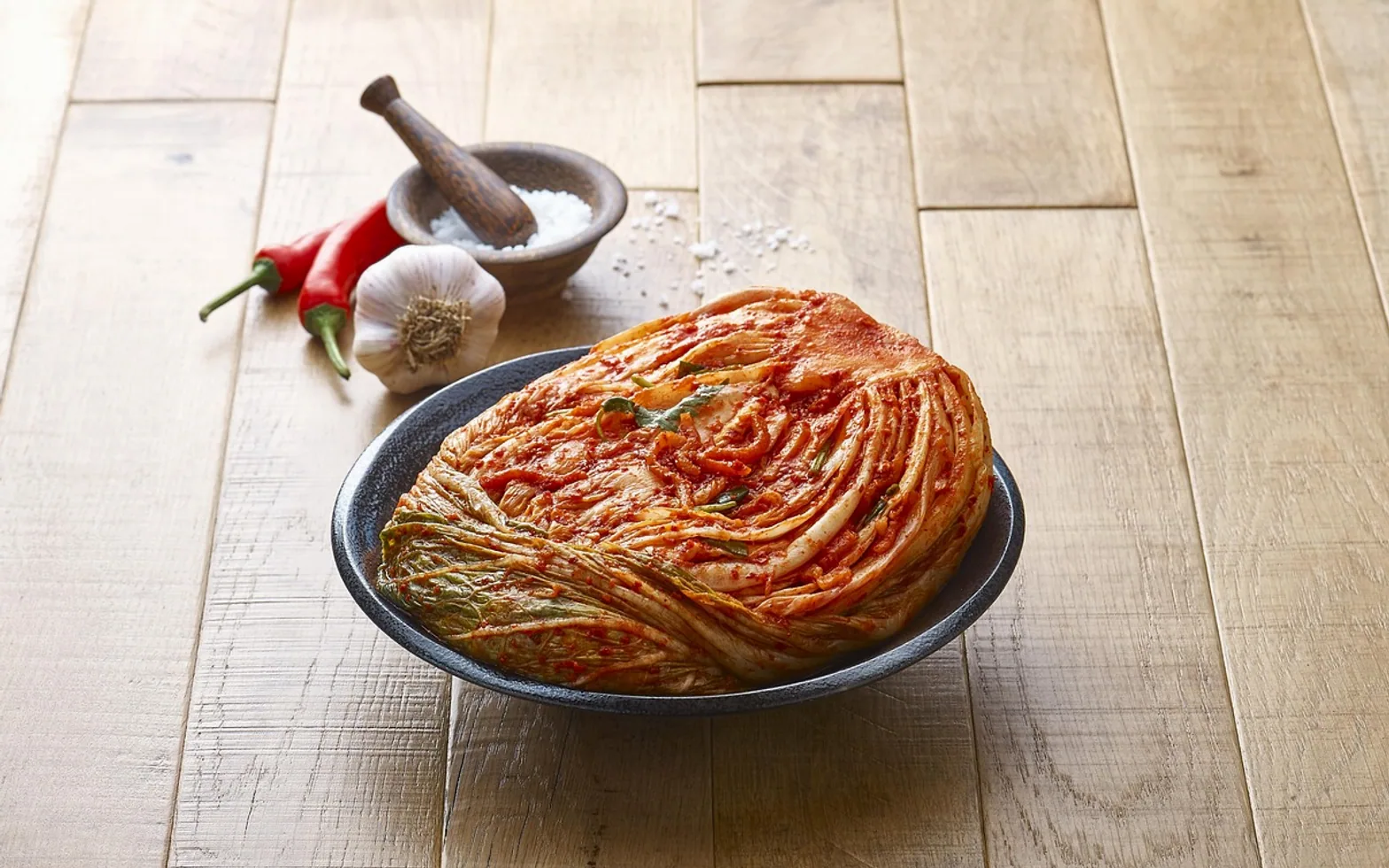
Open a jar of kimchi and the first thing you notice is the fizz: a faint hiss, a sharp sour smell, and cabbage that has gone soft and orange-red. That liveliness is the whole story. Kimchi is vegetables that have been salted and left to ferment, and the fermentation is what turns a plain cabbage into something tangy, punchy and, for many people, a little addictive. Whether it is good for you depends on what you expect from it, how much you eat and what else is on your plate.
The short version: for most healthy adults, kimchi is a good addition to meals. It is mostly vegetables, it brings some fibre, and when it has not been heat-treated it contains live bacteria from the fermentation. Its main drawback is salt, which matters more for some people than others.
What actually goes into the jar
There is no single recipe. The best-known version uses napa cabbage, but radish, cucumber and spring onion kimchis are common too. A typical batch includes:
- Vegetables: cabbage or radish as the base, often with carrot, spring onion or chives.
- Salt: used to draw water out of the cabbage and steer the fermentation.
- Seasoning paste: chilli flakes, garlic and ginger, sometimes with a little sugar or fruit such as pear.
- Umami ingredients: fish sauce, salted shrimp or other seafood in many traditional versions, while vegan kimchi uses soy sauce, seaweed or miso-style pastes instead.
As the jar sits, lactic acid bacteria that are naturally present on the vegetables multiply and turn sugars into acid. That acid gives kimchi its sourness and also helps preserve it, which is why it keeps for weeks in the fridge and grows more sour as it ages.
What kimchi brings to a meal
Much of the appeal is ordinary rather than exotic. Kimchi is a way of eating more vegetables, and it does so with very little fat and few calories for the amount of flavour it adds. A spoonful beside rice, eggs or a bowl of soup makes a simple meal more interesting, which is half the battle with eating well.
The cabbage and radish bring fibre. A side dish will not cover a day's needs on its own, but it adds to the total alongside wholegrains, pulses and other vegetables; if more fibre tends to leave you bloated, our answer on building up fibre without an upset stomach suggests a gentler pace. Kimchi also carries some of the vitamins and minerals of the vegetables it is made from, and garlic, ginger and chilli bring their own plant compounds.
Then there are the live cultures. Fermented foods have attracted a lot of interest for their possible effects on the gut and its bacteria, and research in this area is active. It is fair to say kimchi can be part of a varied diet that supports digestion; it is not fair to treat it as a cure for anything. Claims that a fermented food will fix your immune system, your weight or your mood go further than the evidence.
Does shop-bought kimchi still contain live bacteria?
It depends on the product. Kimchi sold chilled and labelled as raw, live or unpasteurised usually keeps its cultures, and the jar may bulge or fizz a little as fermentation carries on. Shelf-stable kimchi in tins or pouches has often been heat-treated, which stops fermentation and kills most of the bacteria. It still provides vegetables and flavour, just without the live element.
The salt question
Salt is not an optional extra in kimchi; it is part of how fermentation works. The amount varies widely between brands and home recipes, so reading the label is worth the few seconds it takes. For most people, a small side portion fits easily into a day's eating, especially if the rest of the meal is not heavily salted.
It is different if you have been told to cut down on salt, for example because of high blood pressure, heart problems or kidney disease. In that case, keep portions small, compare labels for lower-salt options, and check with your GP, practice nurse or a registered dietitian about how fermented and pickled foods fit your own plan. Rinsing kimchi lightly removes some surface salt, though it also washes away some flavour.
Who might want to go gently
| Situation | Why it matters | A sensible approach |
|---|---|---|
| New to fermented foods | A sudden large portion can cause wind or bloating | Start with a spoonful or two and build up over a couple of weeks |
| Heartburn or reflux | Chilli, garlic and acidity can trigger symptoms in some people | Notice how you feel after small amounts; milder white kimchi may suit better |
| Irritable bowel syndrome | Garlic, onion and cabbage are common triggers for some people with IBS | Follow any advice from your GP or dietitian about which foods to test |
| Weakened immune system or pregnancy | Unpasteurised and seafood-containing foods may carry extra food-safety advice | Ask your midwife, GP or specialist team which versions are suitable |
| Fish or shellfish allergy | Many traditional recipes contain fish sauce or shrimp | Read labels carefully or choose a clearly labelled vegan kimchi |
Easy ways to eat it
In Korea, kimchi is rarely eaten as a health food in its own right; it is simply one of the shared side dishes on the table, and our piece on Korean table manners and shared banchan describes how those dishes are passed around. At home, a few low-effort ideas work well:
- Spoon it beside fried or scrambled eggs and rice for a quick breakfast or lunch.
- Stir chopped kimchi into fried rice at the end of cooking.
- Add it to a sandwich or toastie with cheese for sharpness.
- Use older, very sour kimchi in stews and soups, where cooking mellows it.
- Pair it with beans or tofu and plenty of vegetables; frozen spinach or edamame are handy here, and our answer on frozen versus fresh vegetables explains why they are a perfectly good choice.
Keep the jar in the fridge with the lid closed, use a clean spoon each time, and press the vegetables back under their liquid. If it smells rotten rather than sour, grows fuzzy mould or turns slimy, throw it away.
So is kimchi good for you? As a regular, modest side dish in an otherwise varied diet, it is a tasty way to eat more vegetables and bring fermented food to the table. Just keep an eye on the salt, start small if your gut is unused to it, and take the bigger promises on the label with a pinch of scepticism.
Across the sections


Spotted a mistake?
A short note is enough.
Neighbouring questions
- No. 27Korean Dining Etiquette: How to Eat, Share and Pay at the Table5 min
- No. 26Is It Better to Drink Cold or Warm Water?4 min
- No. 22Do Beans Have Protein, and Are They Enough on Their Own?4 min
Other themes to explore