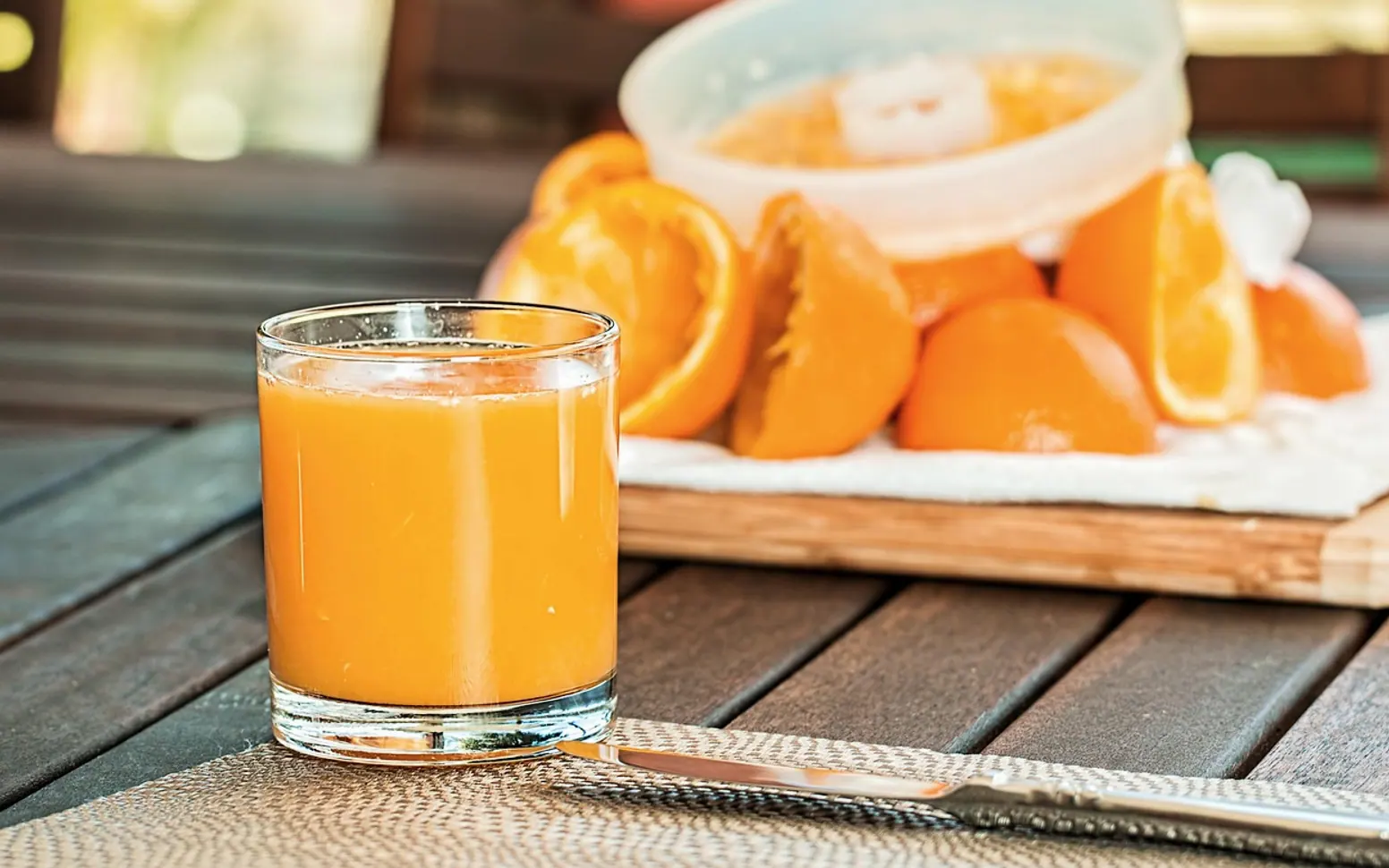
Fruit juice is not a villain, but it is harder on teeth than its healthy image suggests. It carries natural sugars that feed the bacteria behind decay, and most juices are acidic enough to soften the surface of enamel for a while after each sip. A small glass with breakfast is a very different thing from a carton kept on the desk and sipped all afternoon. For teeth, the pattern of drinking matters more than whether juice is in your fridge at all.
Two separate problems in one glass
It helps to split the worry in two, because sugar and acid damage teeth in different ways.
| Sugar | Acid | |
|---|---|---|
| What it does | Feeds plaque bacteria, which then produce acid of their own | Softens enamel directly, with or without plaque |
| Main risk | Tooth decay, especially along the gum line and between teeth | Erosion: gradual thinning of enamel over years |
| Made worse by | Frequent sips spread through the day | Holding or swishing juice in the mouth, and brushing hard straight afterwards |
| Does "no added sugar" help? | Not much; the fruit's own sugars still count | No; the acidity comes from the fruit |
Citrus juices such as orange, grapefruit and lemon tend to be the most acidic, but apple, pineapple and many blends are acidic too. Smoothies keep some of the fruit's fibre, yet the blending still releases the sugars, so teeth treat them much like juice.
Why frequency is the real issue
Every time sugar or acid reaches the teeth, the mouth goes through a spell where enamel is under attack. Saliva then gradually neutralises things and helps the surface recover. If juice arrives once, with a meal, there is plenty of time for that repair in between. If it arrives every twenty minutes, the recovery never quite finishes. That is why dental teams tend to ask when you drink juice, not only how much.
The same softening effect is the reason timing your toothbrush matters on juice mornings; our answer on brushing before or after breakfast explains why waiting a while after acidic drinks is kinder to enamel.
Habits that go easier on teeth
- Keep juice to mealtimes. Food encourages saliva, which helps buffer acid, and it limits the number of separate "hits" across the day.
- Pick a small glass. Many health services suggest a modest portion of juice a day at most, so check the guidance where you live.
- Dilute it. Topping juice up with water makes it last longer and weakens both sugar and acid.
- Drink rather than sip. Finishing a glass in one go is better for teeth than nursing it for an hour.
- Use a straw if you like one. It can reduce contact with the front teeth, though it does not protect the back ones.
- Follow with water. A drink of plain water afterwards rinses the mouth, and whether you take it chilled or warm is up to you, as our piece on cold versus warm water discusses.
- Eat the whole fruit more often. An orange takes longer to eat, comes with its fibre and is generally gentler on teeth than the same fruit squeezed into a glass.
What about children?
Young teeth have thinner enamel, and toddlers often drink in exactly the pattern that is hardest on teeth: little and often, from a cup carried around the house. General advice in many countries is that milk and water are the best everyday drinks for young children, with juice, if given at all, kept small, diluted and served with a meal in an open cup. Juice in a bottle at bedtime is best avoided altogether, because saliva flow drops during sleep. As the first teeth arrive, it can help to know the order baby teeth usually come through, so you know which surfaces need brushing. A health visitor, family doctor or dentist can give advice that fits your child.
Can juice stain or yellow teeth?
Some deeply coloured juices, such as grape, cranberry or pomegranate, can leave surface stains much like tea or red wine. The bigger long-term effect is erosion: as enamel thins, the yellower layer underneath shows through more. Our answer on why teeth turn yellow looks at the difference between surface stains and colour coming from within.
When to mention it to a dentist
Erosion and early decay are often painless at first, which is one reason regular dental check-ups are worth keeping. Bring up your drinking habits if you notice any of the following:
- teeth that feel sensitive to cold, hot or sweet things;
- front teeth that look glassy or slightly see-through at the edges;
- small chips, dents or a change in the shape of the biting surfaces;
- brown or chalky white spots that were not there before.
Most people do not need to give up juice. Treat it as part of a meal rather than a drink to graze on, keep the glass modest and let water do the rest of the work.
Across the sections

Spotted a mistake?
A short note is enough.
Neighbouring questions
- No. 24What Order Do Baby Teeth Come In?4 min
- No. 20Why Do Wisdom Teeth Exist, and Does Everyone Get Them?4 min
- No. 16Why Are My Teeth Yellow, and What Can Make a Difference?4 min
Other themes to explore